EVIT Logo
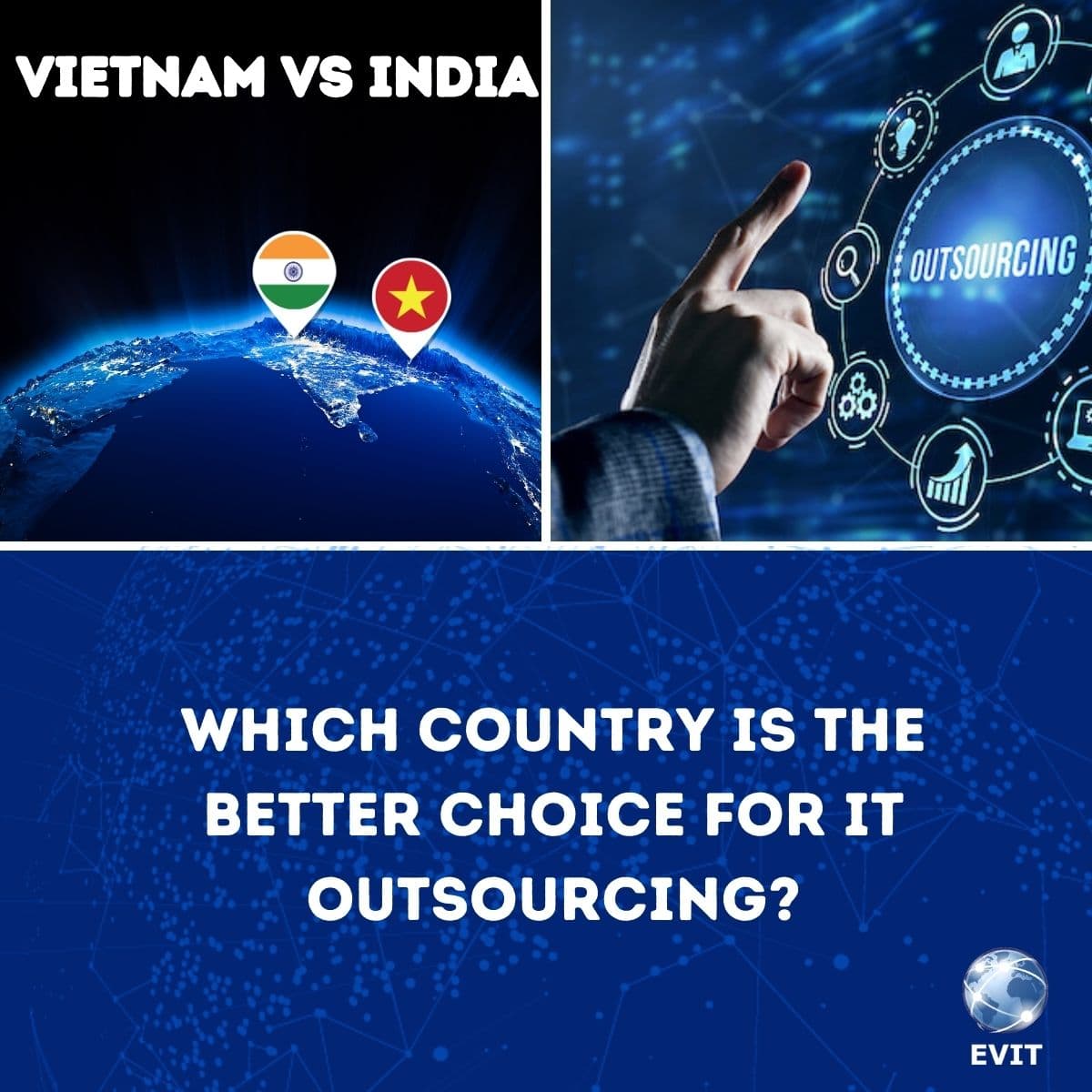
Vietnam vs India: Which Country is the Better Choice for IT Outsourcing?

Vietnam vs India: Which Country is the Better Choice for IT Outsourcing?

21/12/2023Business
In recent years, both Vietnam and India have emerged as popular destinations for IT outsourcing, offering a range of benefits to businesses looking to tap into their technology talent pools. However, the question remains – which country is the better choice for IT outsourcing?


In this blog post, we’ll compare the two countries across various factors:
Cost of Labor:
According to Saigontechnology.com, the average hourly rate for senior IT engineers in Vietnam ranges from $20 to $40. In contrast, the average hourly rate for senior IT professionals in India ranges from $25 to $50. This means that Vietnam’s labor costs are approximately 30% lower than those in India.
→ Overall, while both Vietnam and India offer competitive labor costs for IT outsourcing, Vietnam’s rates are generally slightly lower, making it an attractive alternative for companies looking to save costs without sacrificing quality.
Time Zone:
India is located in the UTC+5:30 time zone, while Vietnam operates in UTC+7. Both Vietnam and India offer convenient time zones for Western clients, with only a slight difference.
Availability of Skilled Talent:
India has a larger pool of skilled software engineers than Vietnam, with over 2 million developers, engineers, and technologists graduating from its universities every year. India takes the lead when it comes to the sheer volume of experienced talent available who have worked on complex projects for global clients.
English Proficiency:
Both Vietnam and India offer advantages and disadvantages for English proficiency in IT outsourcing. India has a higher overall level of English proficiency, but its native speakers are known for speaking quickly and with a strong accent that can be difficult to understand.
In contrast, Vietnam has a lower overall level of English proficiency, but its native speakers have a more neutral accent that is generally easier to understand. Additionally, Vietnamese communication styles tend to be more direct and less nuanced than Indian communication styles, which can also be easier to understand.
Cultural Alignment:
Vietnam shares a cultural history with many Western nations, influenced by a long and intricate relationship with various foreign powers, allowing for the integration of diverse cultural aspects. Moreover,  when compared to India, Vietnam demonstrates a higher level of openness, which can facilitate a smoother integration of global outsourcing partners into corporate cultures for businesses.
 
Geographical Advantage:
Vietnam’s strategic location in Southeast Asia gives the country direct access to the booming APAC market, with its proximity to numerous high-potential economies like Singapore, Japan, China, Hong Kong, Thailand, and Australia. This puts Vietnam at a significant advantage over India, which is geographically distant from major IT hubs and lacks a similar concentration of potential markets.
Government Support:
Vietnam offers cost-effective solutions for IT outsourcing with a dynamic environment, strong economic growth, and attractive government policies that encourage foreign investment. Meanwhile, India provides a well-established legal framework and offers various financial incentives that support IT outsourcing.
To sum up, both governments provide substantial support to the IT industry. Deciding which is suitable for outsourcing will depend on various factors, including your business projects, requirements, and other relevant considerations.
In conclusion, both India and Vietnam offer a variety of advantages and disadvantages as destinations for IT outsourcing. The choice between the Philippines and Vietnam will depend on the specific needs and priorities of each individual or organization.

OTHER NEWS

B2B Lead Generation in 2026: Why the Old Way Is Dead & What Works Now

In this article, you’ll learn: Why traditional B2B lead generation no longer works How signal-based outreach outperforms mass prospecting How AI helps you find buyers who are ready to buy Why fewer, more relevant messages generate better results How I raised reply rates from 2% to 5.8% Why SMEs need to rethink their sales strategy […]

Sales Debt: 3 Steps to Restart Growth

What is Sales Debt? Sales debt is the accumulated cost an IT company pays in the future for skipping the work of building a real sales engine today. It is the sales-side mirror of technical debt. When a software team ships bad code or takes a shortcut to save time now, the bill arrives later […]

4 Make-or-Break Trends for IT Companies in 2026

IT Companies in 2026 – The EVIT Heat Map for Global Growth AI is no longer a competitive advantage, it is the new baseline for IT companies. In 2026, global growth will depend on four strategic shifts: embracing AI-first delivery, leveraging low-code as an opportunity, proving operational efficiency, and optimizing visibility for AI-powered search through […]