
Picture this: ignoring global expansion risks, you launch into a new market and watch years of hard work unravel in weeks—no contracts, no clients, and sunk costs sky‑high. Specifically, in this article, we will point out four brutal missteps that can wreck your global expansion plan and Exactly How to Mitigate them
1. Cultural Misalignment
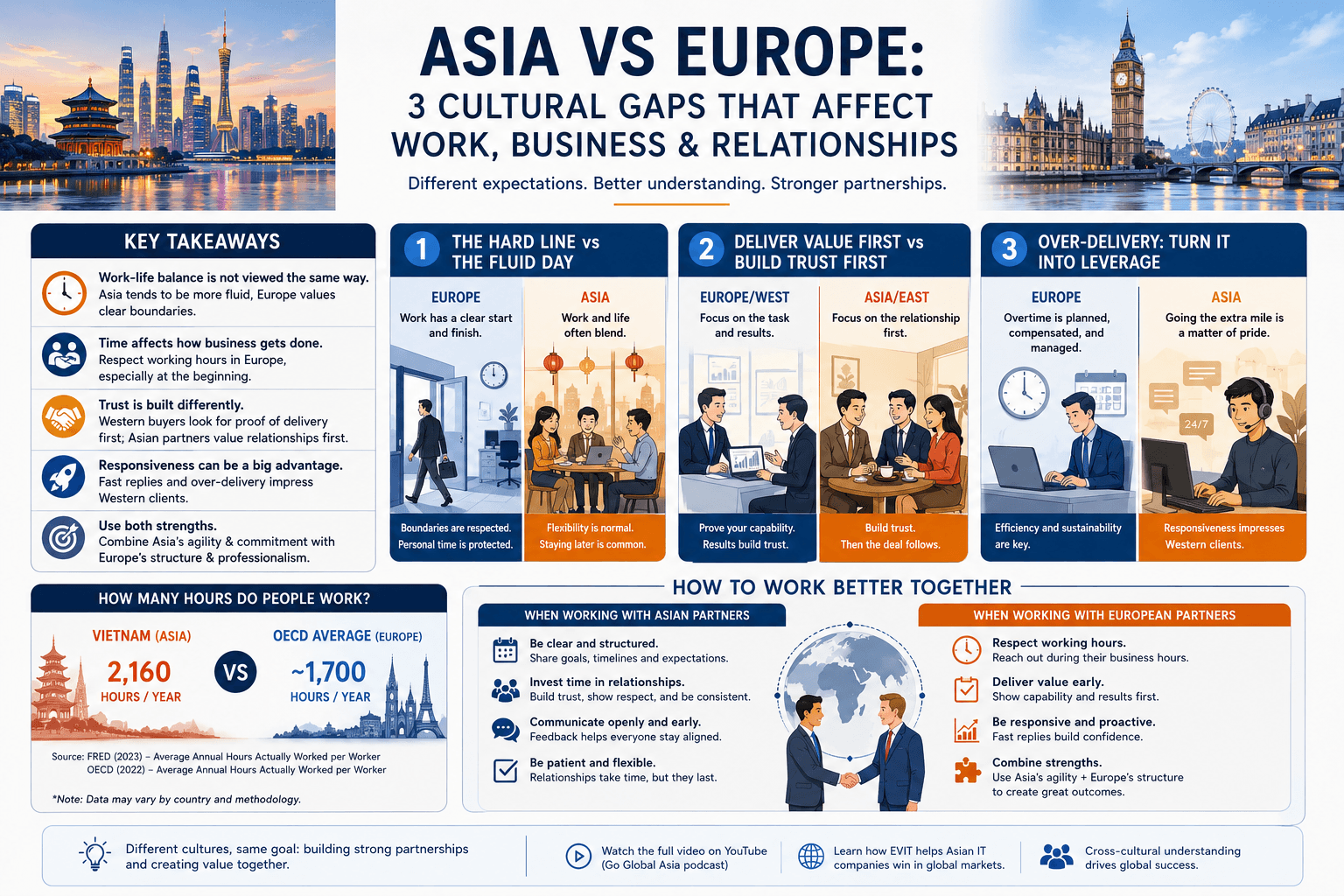
Why it matters: Indeed, beyond language, every market has unique norms around hierarchy, feedback, and compensation. Ignoring these can lead to demoralized teams or offended clients.
- Example: In Vietnam, employees expect a 13th‑month bonus; skipping it can trigger resignations. In Germany, blunt feedback is standard—Asian teams may misinterpret it as disrespect.
- Mitigation: Develop a market playbook detailing local holidays, bonus practices, communication styles, and decision‑making protocols. Run cross‑cultural training sessions before your first hire or client meeting.
2. Operational Inflexibility
Why it matters: However, a rigid, waterfall‑only delivery model may satisfy some clients, but Western partners expect you to act as a strategic advisor—proposing improvements, not just executing specs.
- Example: Japanese clients often provide complete scope up front. European clients view you as the expert and demand iterative feedback and course corrections.
- Mitigation: Adopt a hybrid agile approach:
- Scope workshops: collaboratively define goals and success metrics.
- Sprint reviews: deliver incremental value and gather client feedback.
- Expert forums: schedule periodic consultative sessions to propose enhancements.
3. Regulatory & Political Shifts
Why it matters: As a result, sudden tariff changes, new tax policies, or complex dispute‑resolution rules can derail cash flow and profitability—especially in stringent markets like the U.S.
- Example: U.S. service providers face limited legal recourse if a client delays payment. A new digital services tax could increase your costs overnight.
- Mitigation:
- Draft flexible contracts with clear payment milestones and exit clauses.
- Partner with local counsel to stay updated on international business laws and regulations.
- Build a tax‑planning reserve to absorb unexpected duties.
4. Reputation Damage
Why it matters: Similarly, a mis‑targeted marketing campaign or culturally tone‑deaf outreach can offend prospects—and even tarnish your country’s IT sector reputation.
- Example: A mass cold‑email blast in South Korea may prompt backlash, labeling your entire industry as “spammy.”
- Mitigation:
- ICP segmentation: map preferred channels and content types for each persona (C‑suite vs. technical leads).
- Outreach pilot: test 10–20 messages; measure engagement and adjust tone.
- Local endorsements: co‑brand case studies with in‑market partners or clients to build trust.
Your Next Steps: Robust Market Entry Strategies
✔ Partner Locally: First, engage a trusted advisor or consulting for IT companies to validate your assumptions.
✔ Stay Agile: Then, review these risks—and your playbook—every quarter.
✔ Protect Your Brand: Ultimately, your reputation is your most valuable asset. Prioritize cultural fit and legal compliance at every touchpoint. Our global expansion services can help you plan around these risks before they cost you deals.
👉Watch full episode: here