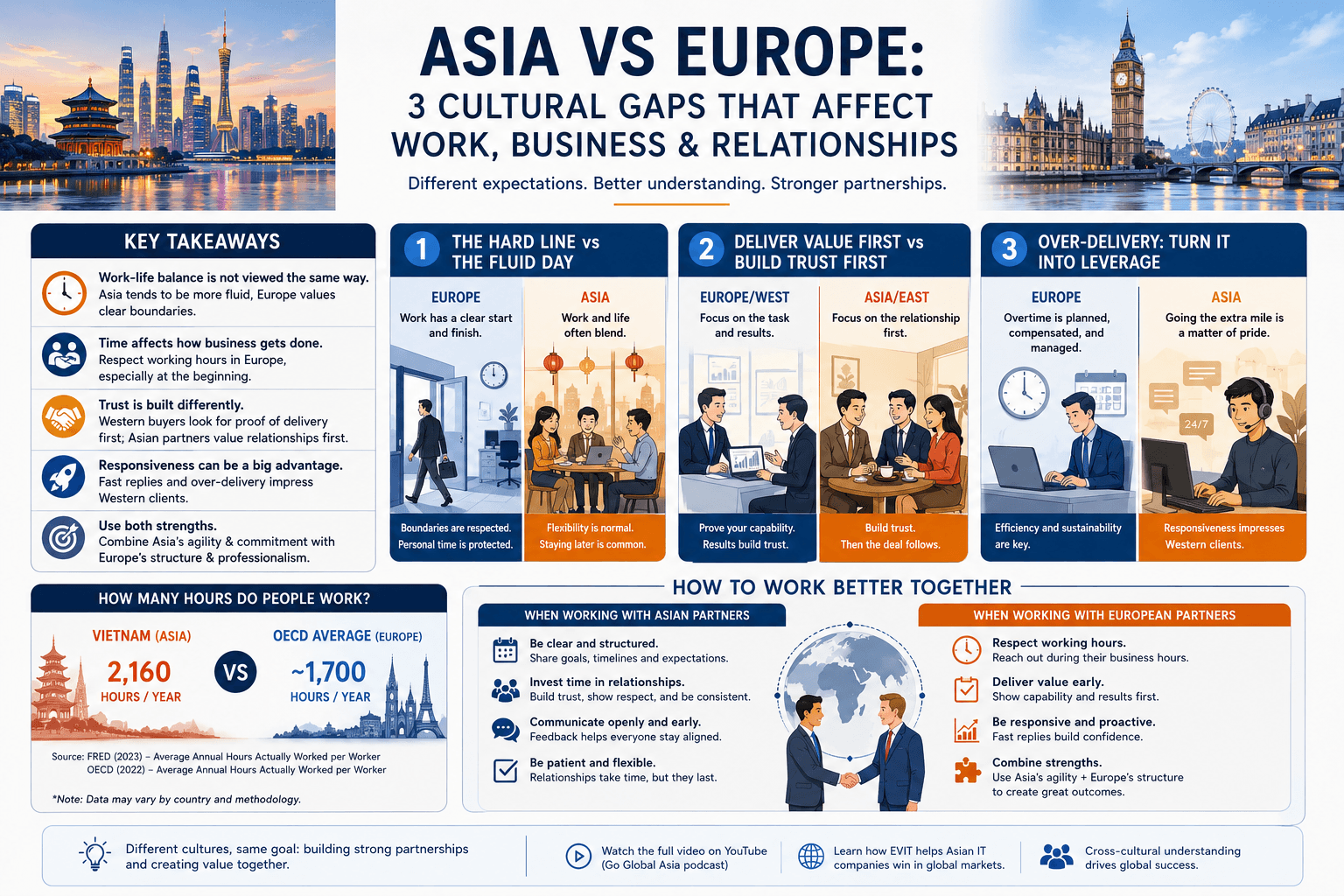

When Vietnam IT vendors plan to go global, technical expertise alone isn’t enough. The way you communicate with potential clients across markets like Europe, the US, and Australia can determine whether your market entry succeeds or stalls. Language, tone, and message structure must be adapted to different cultural expectations.
Why Language Customization Matters
Every region has its own communication norms:
-
US clients prefer short, direct, and results-oriented messages. They value clarity, speed, and straightforwardness.
-
European clients (especially in Western Europe) appreciate professionalism, context, and balanced detail. Relationships are often built on trust and precision.
-
Australian clients lean toward a friendly but professional tone. They prefer openness, practical value, and clear outcomes.
Failing to adapt your communication style risks being misunderstood, overlooked, or even seen as unprofessional.
Steps to Customize Your Client Messaging
1. Define Your ICP and Market Expectations
Before sending any proposal or cold email, understand who you’re addressing. C-level executives, procurement managers, or project leaders each expect different tones and levels of detail.
2. Adapt the Tone and Structure
-
US: Use action-oriented language. Example: “We can reduce your IT cost by 30% with a proven outsourcing model.”
-
Europe: Provide context. Example: “Based on our experience in fintech outsourcing, we can help optimize both security compliance and cost efficiency.”
-
Australia: Keep it conversational yet professional. Example: “We’d love to explore how our IT team can help streamline your workflow and save your team valuable time.”
3. Localize Content Where Possible
Go beyond English — ensure your messaging reflects local business etiquette. Using region-specific terminology, time formats, or even local case studies signals respect and professionalism.
4. Balance Formality with Authenticity
A rigid, one-size-fits-all email template can appear khô khan (dry) or cứng nhắc (rigid). Instead, personalize messages, mention the client’s business context, and highlight mutual goals.
5. Train Your Sales & Marketing Teams
Equip your team with intercultural communication training. Encourage them to practice writing with different tones, review real client messages, and adjust according to feedback.
Final Thoughts
To go global, Vietnam IT vendors need more than just competitive pricing and technical skills. Effective market entry also means mastering the language of clients. By adapting tone, structure, and cultural nuance, you build stronger connections and increase your chances of winning contracts in Europe, the US, and Australia.
At EVIT Organization, we help IT vendors sharpen their global communication strategies, so your message resonates — wherever your market entry takes you.