
Expanding into global markets is an exciting yet challenging journey for Vietnam IT vendors. Europe, the US, and Australia all present lucrative opportunities for IT outsourcing, but success depends on one critical element: a well-structured go-to-market (GTM) strategy. Without it, even the most capable vendors risk struggling with alignment, pricing, positioning, and client acquisition.
At EVIT Organization, we work with IT companies across Asia to help them go global and design effective market entry strategies. Below, we share how Vietnam IT vendors can build a GTM plan that drives sustainable international growth.
1. Define Your Market Entry Goals
Every GTM strategy begins with clarity. Before entering Europe, the US, or Australia, vendors must define:
-
Which markets to prioritize — based on demand, competition, and cultural fit.
-
What success looks like — revenue goals, number of new clients, or brand recognition.
-
Which services to lead with — software development, testing, cloud solutions, or niche expertise.
A clear set of goals ensures your GTM strategy stays focused and measurable.
2. Identify & Refine Your ICP (Ideal Customer Profile)
In global IT outsourcing, knowing your customer is everything. A solid ICP includes:
-
Industry verticals (e.g., fintech, healthcare, retail).
-
Company size (startups vs. enterprises).
-
Buyer roles (CEO, CTO, procurement, or product managers).
-
Their pain points (cost savings, scalability, digital transformation).
Tailoring your value proposition to each ICP builds trust and relevance in competitive markets.
3. Craft a Competitive Positioning & Messaging Framework
Positioning is the bridge between your services and the client’s needs. To stand out:
-
Highlight your differentiators — technical expertise, cost-effectiveness, cultural compatibility, or agile delivery.
-
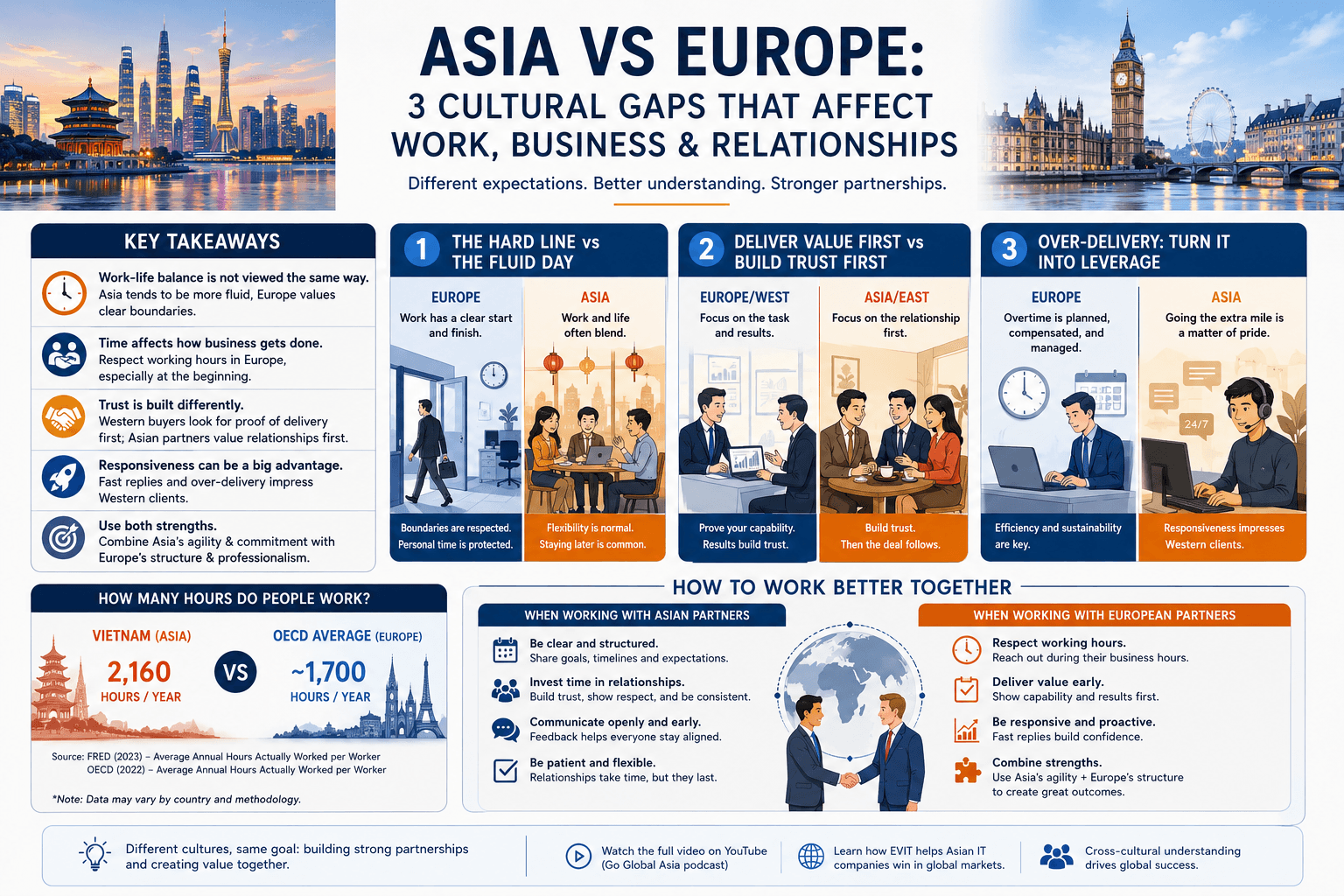
Adapt messaging by region — US clients prioritize ROI and speed, while European clients often value compliance and long-term partnership.
-
Speak to emotions as well as logic — decision-makers are people, not just corporations.
4. Develop a Pricing Strategy Aligned with Market Expectations
Pricing can make or break your global market entry. Avoid a “one-size-fits-all” approach:
-
In the US, clients may pay premium for speed and innovation.
-
In Europe, competitive pricing balanced with compliance assurance is key.
-
In Australia, transparency and reliability often win over low-cost bids.
Benchmark against competitors but also ensure your pricing reflects your value, not just your cost.
5. Choose the Right Channels for Lead Generation
A GTM strategy must outline how you’ll reach clients. Effective channels include:
-
LinkedIn & B2B marketing for building thought leadership.
-
Partnerships & alliances with local resellers or consulting firms.
-
Conferences & trade shows in IT hubs like London, New York, or Sydney.
-
Content marketing (case studies, blogs, webinars) to showcase expertise.
Each market has different trusted channels — adapt accordingly.
6. Build Localized Sales & Support Teams
To truly go global, IT vendors must bridge cultural and time-zone gaps:
-
Hire local representatives or build partnerships.
-
Train sales teams to understand decision-making processes in each region.
-
Ensure after-sales support is reliable and aligned with client expectations.
Localization is more than language — it’s about relationships and trust.
7. Execute, Measure, and Iterate
A GTM strategy is not static. Once executed, track KPIs such as:
-
Lead-to-deal conversion rates.
-
Average deal size in each market.
-
Client retention rates.
Refine your strategy continuously based on feedback and performance data.
Final Thoughts
For Vietnam IT vendors, building a strong go-to-market strategy is the foundation of successful market entry into Europe, the US, and Australia. The key is to combine strategic clarity with cultural sensitivity, competitive pricing, and localized execution.
At EVIT Organization, we’ve seen that IT companies who align their GTM strategy with international market realities are the ones who thrive as they go global.