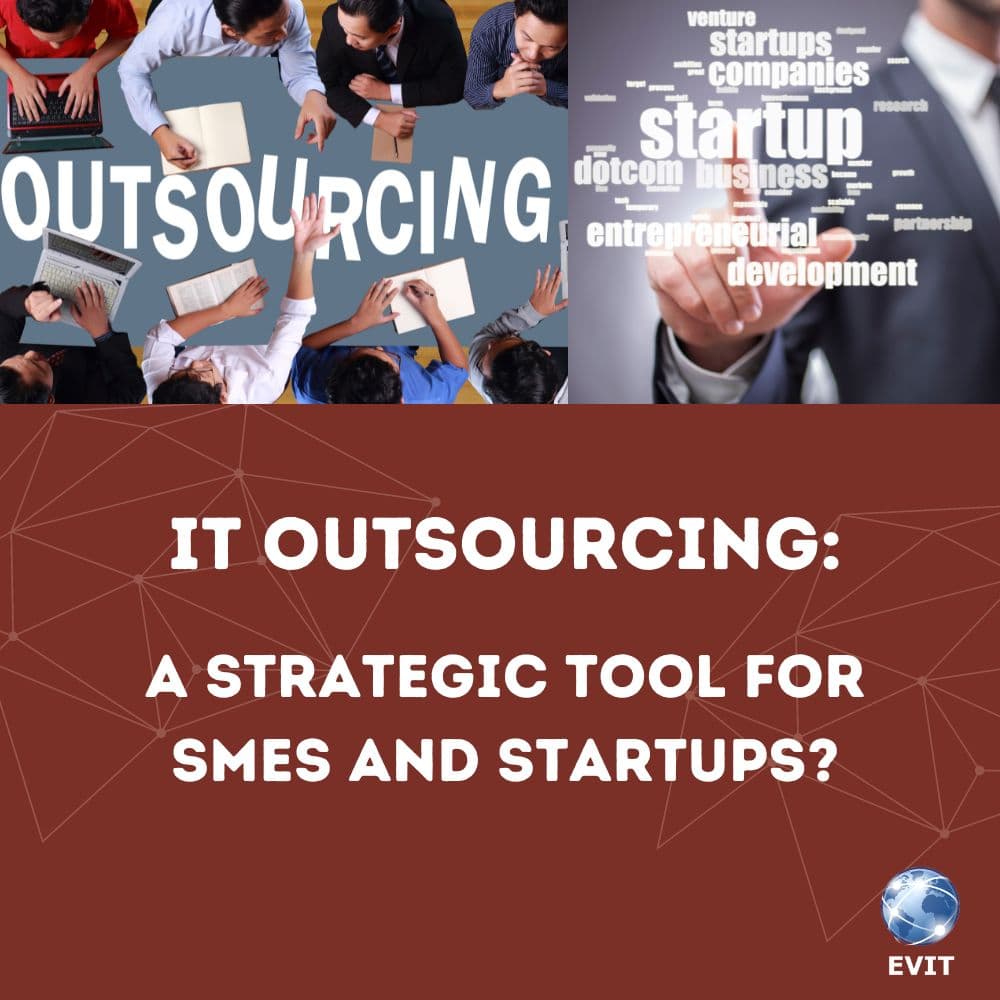
In today’s technology-driven world, businesses of all sizes rely heavily on IT systems to operate efficiently and effectively. However, small and medium-sized enterprises (SMEs) and start-ups often face significant challenges when it comes to managing their IT. Limited resources, lack of expertise, and tight budgets frequently hinder these organizations from maintaining an in-house IT team. This is where IT outsourcing comes into play, offering numerous benefits that help businesses thrive in a competitive landscape.
In this article, we will explore
- IT outsourcing lets SMEs and startups access specialist skills and enterprise-grade tools without the overhead of a full in-house department.
- Outsourced teams typically deliver 20-30% lower operating costs than equivalent inhouse functions (Deloitte, 2023).
- Outsourcing works best as a strategic partnership, not just a cost-cutting tactic – the right partner brings scalability, innovation, and consultancy alongside delivery.
Why IT Outsourcing Is a Growth Lever, Not Just a Cost Cut
Every SME and startup eventually hits the same wall: IT needs grow faster than internal headcount, budget, or expertise can keep up. Hiring a full-stack in-house team is expensive and slow, while gaps in cybersecurity, cloud infrastructure, or software delivery can quietly stall growth. IT outsourcing for SMEs has become the default answer – not as a stopgap, but as a deliberate growth strategy.
The market data backs this up. The global IT services outsourcing market was valued at roughly $744.6 billion in 2024 and is projected to reach $1,219.3 billion by 2030, growing at an 8.6% CAGR (Grand View Research, 2024). Adoption at the small-business level is accelerating just as fast: 37% of small businesses now outsource at least one function, up from just 23% in 2019 (Clutch, 2024) — a sign that outsourcing has moved from a niche tactic to mainstream practice. Below are the four ways outsourcing delivers strategic value, expanded from the original framework.
Improved Efficiency and Productivity
The most immediate benefit of IT outsourcing is freeing internal teams to focus on what actually differentiates the business. When SMEs delegate infrastructure management, software maintenance, QA, or helpdesk functions to an external partner, internal staff stop firefighting technical issues and start working on product, customer experience, and revenue-generating activity.
External providers also bring maturity SMEs rarely have in-house: documented processes, DevOps pipelines, established QA frameworks, and access to specialized tooling that would be cost-prohibitive to build internally. That maturity compounds — projects ship faster, defect rates drop, and technical debt accumulates more slowly because the outsourced team has done similar work many times before.
The cost side reinforces the productivity gain. Deloitte’s 2023 analysis found outsourced functions run 20-30% cheaper than in-house equivalents on average, with IT-specific functions like helpdesk support seeing savings as high as 38-79% depending on scope. For a founder or IT director, that means the same budget buys more delivery capacity meaningfully.
Core Functions SMEs Typically Outsource First
- Infrastructure and cloud operations
- Application development and QA/testing
- Helpdesk and technical support
- Cybersecurity monitoring and compliance
Flexibility and Scalability
Demand for IT capacity is rarely constant. A product launch, a seasonal spike, or a new market entry can require a sudden surge in development or support capacity — while a slow quarter calls for scaling back just as quickly. Building an in-house team sized for peak demand means paying for idle capacity most of the time; building for average demand means missing deadlines during peaks.
Outsourcing solves this by converting a fixed cost into a variable one. SMEs can ramp a partner team up for a product launch, then scale down once the initial build stabilizes, without the overhead of hiring, onboarding, or layoffs. This flexibility is especially valuable for startups navigating unpredictable funding cycles and product-market fit pivots, where locking in large in-house teams too early is a common and costly mistake.
Scalability also works geographically. Partnering with an outsourcing provider in a market like Vietnam – where the IT services sector is projected to grow from roughly $2.37 billion in 2025 to $4.39 billion by 2031 at a 10.82% CAGR (Vietnam Briefing / Outsource Accelerator, 2025) – gives SMEs access to a rapidly maturing, cost-competitive talent pool that can flex with demand far more easily than a domestic hiring pipeline.
Innovation and Competitiveness
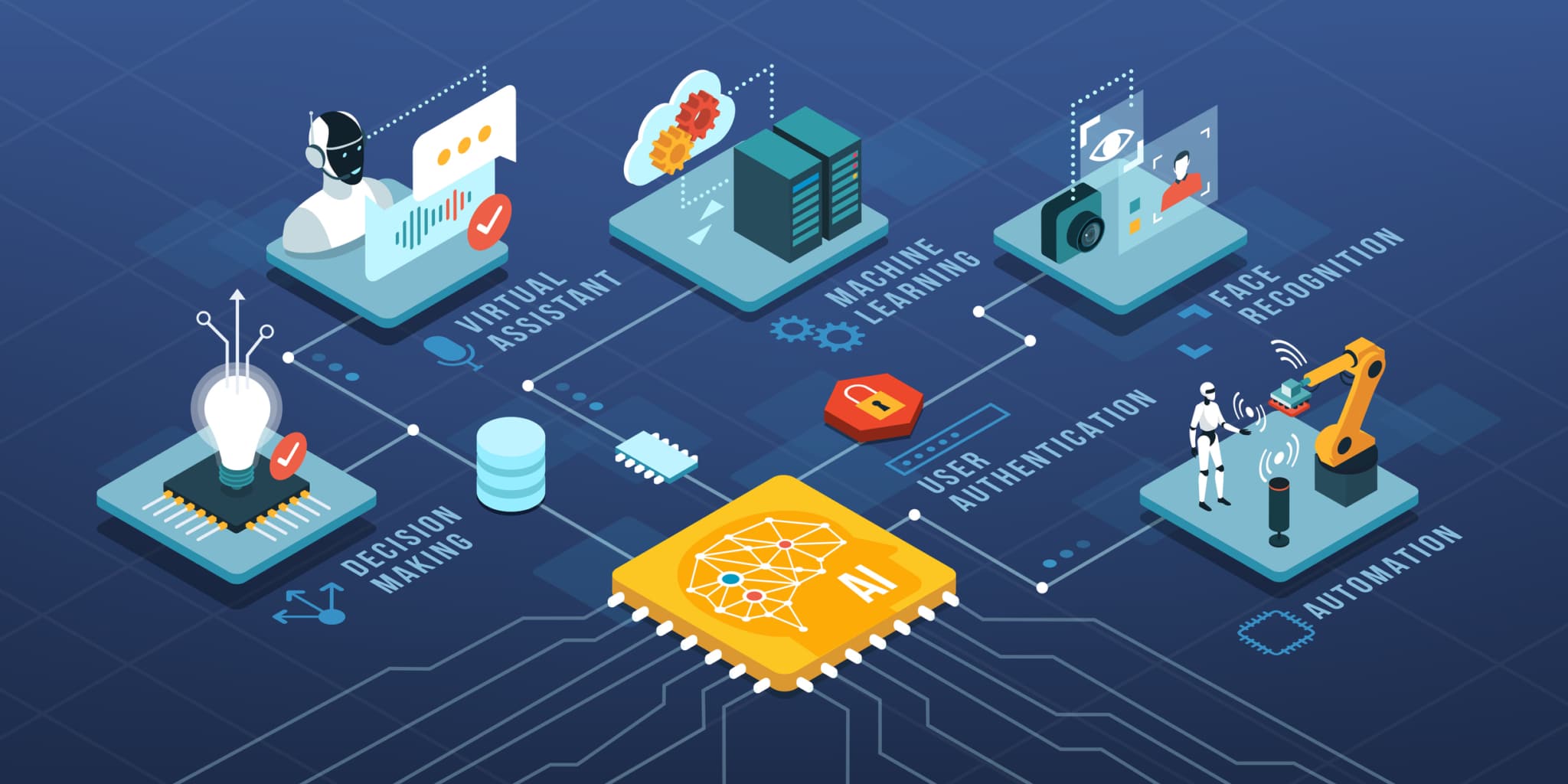
Staying current with emerging technology – AI/ML tooling, cloud-native architecture, DevSecOps, low-code platforms requires continuous investment that most SMEs simply cannot justify for a single internal team. Established outsourcing providers, by contrast, invest in these capabilities across many clients simultaneously, spreading the cost and making cutting-edge tooling accessible to businesses that could never fund it alone.
This matters competitively. SMEs that outsource strategically can adopt new technology at a pace closer to that of much larger competitors, without the multi-year R&D investment those competitors made internally. An outsourcing partner that has already solved a technical problem for other clients brings that accumulated knowledge to your project on day one, compressing the learning curve that would otherwise slow an in-house team.
The result is a faster route from idea to market-ready product – a decisive advantage for startups where time-to-market often determines who wins a category.
Strategic Planning and Consultancy
The most mature IT outsourcing relationships go beyond execution and become an extension of the client’s strategic planning function. Experienced providers don’t just build what they’re told to build – they assess existing infrastructure, flag inefficiencies, benchmark against industry practice, and recommend a roadmap tailored to the client’s growth stage and budget.
For SMEs and startups without a CTO or in-house technical leadership, this consultancy layer is often the most valuable part of the engagement. A good outsourcing partner functions as a fractional technology advisor: helping prioritize what to build first, where technical debt poses the biggest risk, and which investments will actually move the business forward versus which are premature.
This is also where outsourcing shifts from a cost decision to a growth decision. Choosing a partner for their strategic input, not just their hourly rate, is what separates SMEs that treat outsourcing as a long-term capability multiplier from those that treat it as a short-term patch.
Sources:
- Grand View Research, “IT Services Outsourcing Market Size And Share Report, 2030” (2024)
- Vietnam Briefing / Outsource Accelerator, “Vietnam IT services market to hit $4.39Bn by 2031 at 11% growth” (2025)
- Clutch, Small Business Outsourcing Statistics (2024), as compiled by StealthAgents Research (2026)
- Deloitte, Outsourcing Cost Savings Analysis (2023), as compiled by StealthAgents Research (2026)
FAQs
Is IT outsourcing worth it for a small business or startup?
Yes, for most SMEs. Outsourcing typically cuts operating costs 20-30% versus in-house delivery (Deloitte, 2023) while giving access to specialist skills and modern tooling a small team couldn’t otherwise afford. It works best when treated as a strategic partnership rather than a pure cost-cutting move.
What IT functions should an SME outsource first?
Start with functions that are important but not core to your product differentiation: infrastructure/cloud management, QA and testing, helpdesk support, and cybersecurity monitoring. These free internal staff to focus on product and customer-facing work while an experienced partner handles the operational load.
How much does IT outsourcing cost compared to hiring in-house?
Costs vary by scope and location, but outsourced IT functions generally run 20-30% cheaper than equivalent in-house roles, with some functions like helpdesk support seeing savings up to 38-79% (Deloitte, 2023, via StealthAgents Research). Actual savings depend on the provider’s location, expertise level, and engagement model.
Is Vietnam a good destination for IT outsourcing?
Yes. Vietnam’s IT services market is projected to grow from about $2.37 billion in 2025 to $4.39 billion by 2031 (10.82% CAGR), reflecting a fast-maturing talent pool, competitive costs, and strong government investment in tech education (Vietnam Briefing/Outsource Accelerator, 2025). It’s increasingly favored for nearshore and offshore software development.
What’s the difference between IT outsourcing and staff augmentation?
IT outsourcing typically hands a full function or project to an external provider who manages delivery end-to-end. Staff augmentation adds individual outsourced developers or specialists to your existing team, who you manage directly. SMEs often start with augmentation and move to full outsourcing as needs mature.