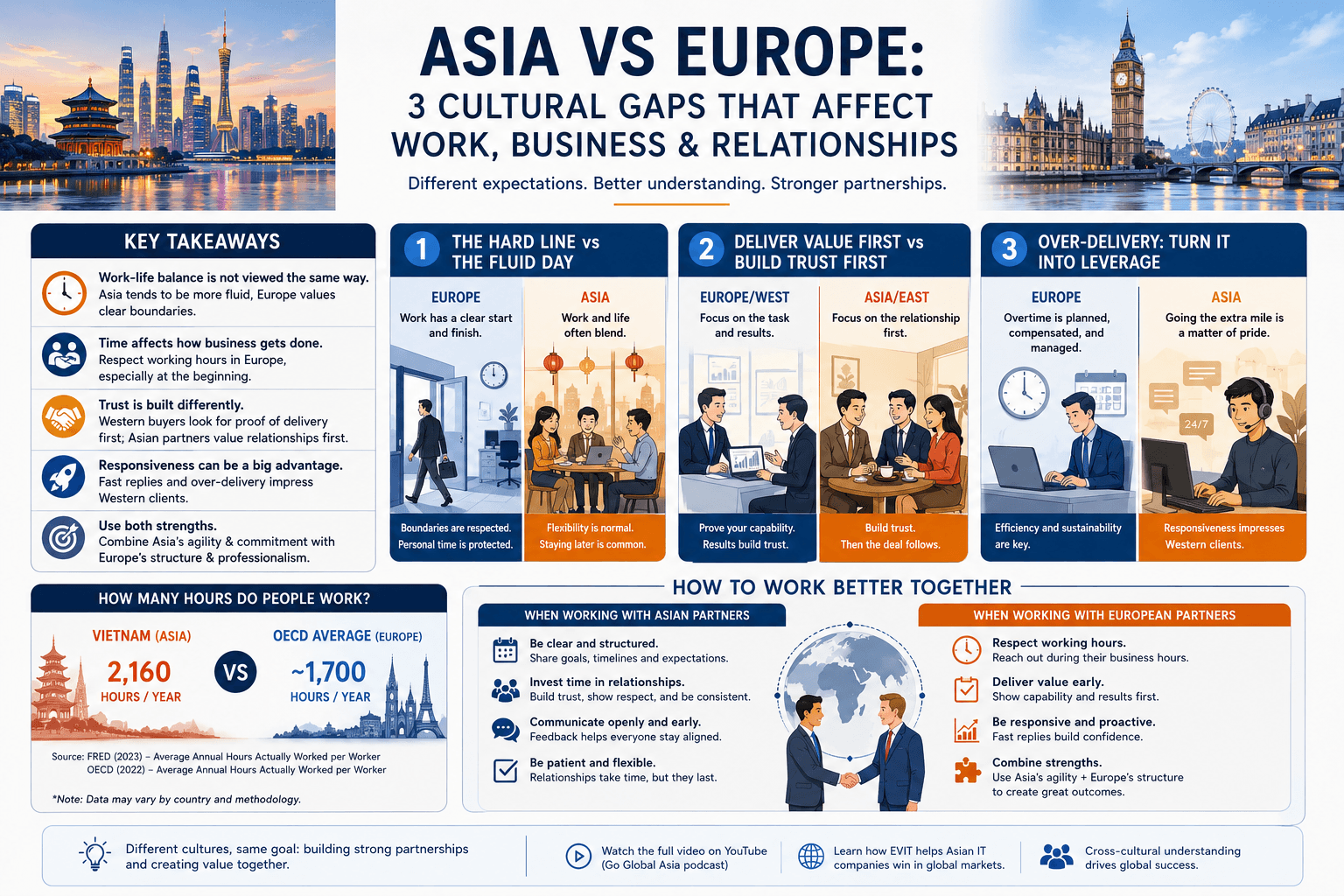

Expanding beyond Vietnam into markets like Europe, the US, and Australia is an exciting opportunity for IT outsourcing vendors. But one of the most underestimated challenges in market entry is not technology, pricing, or even competition—it’s negotiation. When you go global, your ability to negotiate effectively across cultures can define whether deals close smoothly or stall indefinitely.
Why Negotiation Matters in Market Entry
Negotiation is where strategy meets culture. In IT outsourcing, contracts often involve multiple stakeholders, large financial commitments, and long-term partnerships. For Vietnam IT vendors entering new markets, negotiation isn’t just about reaching agreement—it’s about building trust and showing cultural intelligence.
Different Cultures, Different Styles
When preparing for market entry, it’s important to recognize that negotiation styles vary widely across regions:
-
United States: Direct, time-sensitive, and results-driven. Americans often expect clear proposals, strong value arguments, and quick decision-making. Small talk is limited—efficiency matters.
-
Europe (Western): Relationship and process-oriented. Germans prefer detailed contracts and structure, while the French value persuasive arguments and debate. In the UK, diplomacy and subtlety are key.
-
Australia: Similar to the US in valuing efficiency but with a more informal tone. Building rapport matters, but clarity and straightforward communication are essential.
What Vietnam IT Vendors Should Watch Out For
-
Be aware of hierarchy. In Asia, seniority often dominates negotiations, but in the West, decision-making can be shared across multiple roles. Mapping stakeholders is critical.
-
Adapt communication style. Overly indirect answers can be misread as lack of confidence in the US or Europe. Clarity is more respected than formality.
-
Know your value. Western clients will benchmark your pricing and capability against global players. Be ready to justify your unique value in terms of quality, speed, and flexibility.
-
Expect longer cycles. Western negotiations may involve multiple rounds of legal and technical reviews. Patience and consistency build credibility.
Practical Tips for Cross-Cultural Negotiation
-
Do market research before negotiation. Understand how your target country values contracts, relationships, and decision-making speed.
-
Train your team in intercultural skills. Negotiation is not just about language—it’s about body language, tone, and sensitivity to cultural cues.
-
Balance assertiveness with respect. Western clients expect confidence, but aggressive tactics can backfire.
-
Always follow up. Detailed written communication after meetings helps bridge cultural gaps and ensures clarity.
Final Thoughts
For Vietnam IT vendors, negotiation is not a one-size-fits-all process. Success in market entry depends on preparing your team to adapt across cultures, respect local business norms, and maintain professionalism in every interaction.
At EVIT, we’ve seen that those who invest in cross-cultural negotiation skills are the ones who go global successfully, securing long-term partnerships in competitive markets.