
Why do promising sales leads disappear? Every sales lead may seem qualified during the first discovery call, yet many prospects suddenly stop responding. In most cases, the problem isn’t the quality of the sales lead—it’s a misunderstanding of buyer motivation. In this article, you’ll learn why sales leads disappear and how to convert more of them into customers.
In this article, you’ll learn:
- Why promising sales leads disappear.
- The three buyer motivations behind every buying decision.
- How to identify what your prospect truly values.
- How to adapt your sales message to close more deals.
- Why empathy is the most valuable skill in B2B sales.
Why Sales Leads Disappear
Have you ever generated a promising sales lead, held a great discovery call, confirmed the client had a real business problem and then never heard from them again?
You’re not alone.
Most salespeople assume the client wasn’t interested, found a cheaper competitor, or simply became busy. However, in many cases, none of those explanations are true.
The real reason is much simpler: you failed to understand what motivated the buyer to make a decision.
According to Gartner, today’s B2B buying process involves multiple stakeholders with different priorities, making it more important than ever to understand what each decision-maker values most. HubSpot’s State of Sales research also shows that personalized conversations consistently outperform generic sales pitches.
Sources:
- Gartner – Future of Sales Research
- HubSpot – State of Sales Report
Over the past 15 years in B2B sales and the last seven years helping IT companies expand internationally through EVIT, I’ve seen this mistake repeatedly. Companies spend enormous effort generating leads but lose opportunities because they present the wrong message to the right prospect.
The good news is that this problem is completely avoidable.
Sales Leads: High-Ticket vs Low-Ticket
Before discussing buyer motivation, it’s important to understand the difference between low-ticket and high-ticket sales.
Low-Ticket Sales
Low-ticket products or services usually involve relatively small investments. Buyers make decisions quickly because the financial risk is low.
Examples include:
- Software subscriptions
- Online courses
- Small consulting packages
High-Ticket Sales
High-ticket sales involve much larger investments and longer buying cycles.
Most IT outsourcing, software development, AI implementation, and digital transformation projects fall into this category.
Clients often spend weeks or even months, evaluating suppliers before making a decision.
Even relatively inexpensive SaaS products can become high-risk purchases if they require long-term commitments or affect critical business operations.
Why Empathy Helps You Convert More Sales Leads
Whenever someone asks me about the most important sales skill, my answer is always the same:
Empathy
Empathy isn’t about being nice.
It’s the ability to understand how your client thinks, what concerns them, what success looks like for them, and what prevents them from making a decision.
Without empathy, salespeople present features.
With empathy, they solve business problems.
Every successful sales conversation starts with understanding what truly motivates the buyer.
The Three Buyer Motivations
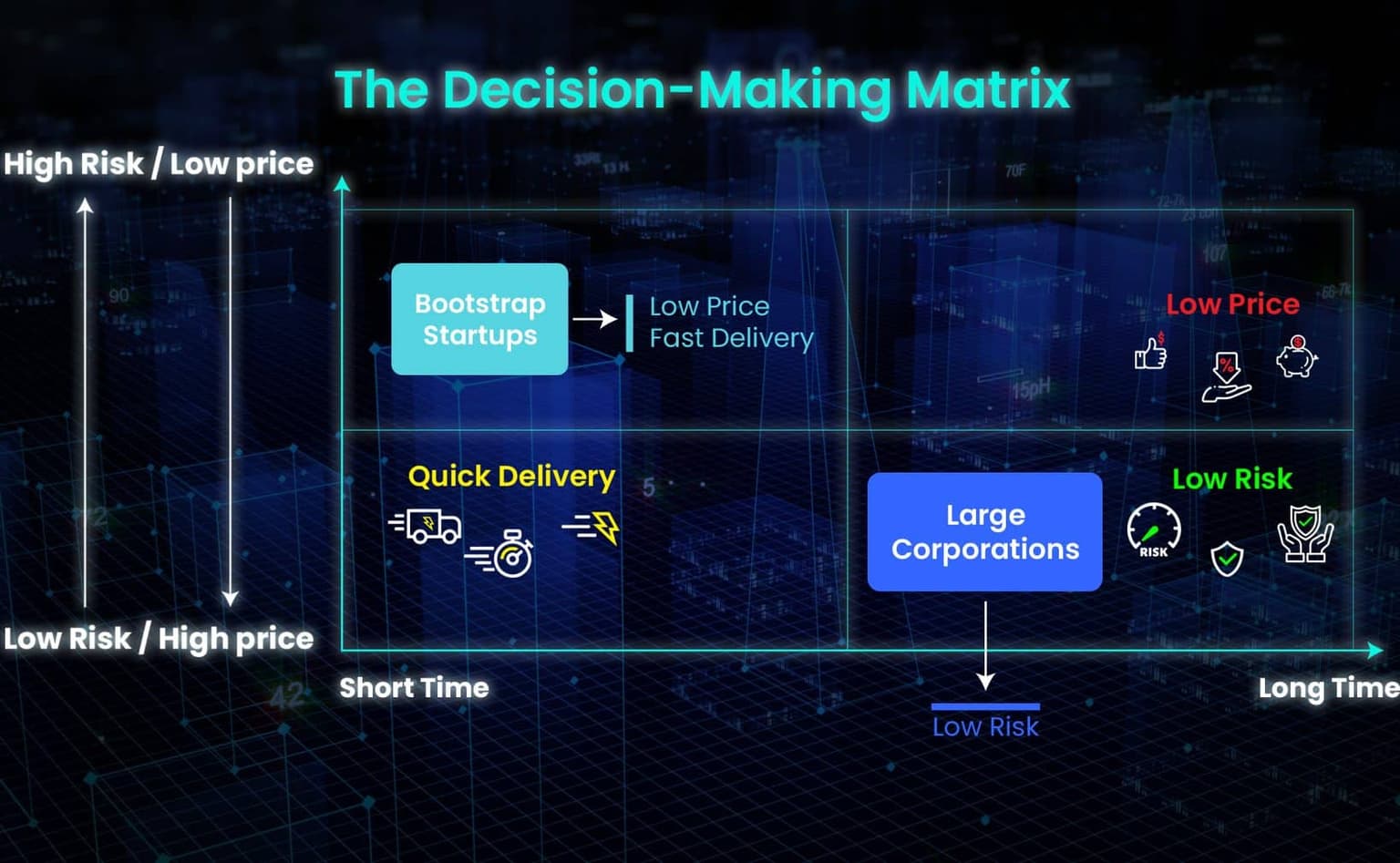
In my experience, almost every buyer can be mapped using three simple priorities.
They usually care most about one of these:
- Price
- Risk
- Time
Understanding which factor dominates allows you to completely change your sales conversation.
1. Sales Leads that Prioritize Price
Some buyers simply want the lowest possible cost.
They’re willing to accept additional risk if it reduces the investment.
Typical examples include:
- Bootstrap startups
- Early-stage founders
- Small businesses with limited budgets
When speaking to these buyers, focus on:
- Cost savings
- Return on investment
- Flexible pricing
- Affordable delivery
2. Sales Leads that Prioritize Risk
Other buyers are willing to pay significantly more if it reduces uncertainty.
Their biggest concern isn’t price.
It’s making the wrong decision.
These buyers often ask for:
- Case studies
- References
- Financial stability
- Certifications
- Long-term support
Large enterprises often belong to this category.
When selling to them, trust matters more than discounts.
3. Sales Leads that Prioritize Time
Some buyers care about one thing above everything else:
Speed.
For them, launching quickly creates competitive advantage.
Typical examples include:
- Fast-growing startups
- Companies launching new products
- Organizations facing urgent deadlines
These buyers respond well when you discuss:
- Delivery timelines
- Fast implementation
- Dedicated teams
- Rapid execution
How to Qualify Sales Leads Using Buyer Motivation
Once you understand these three motivations, the next step is applying them.
Step 1: Map Your Ideal Client Profile
Review your existing customers.
Ask yourself:
- Do they usually negotiate on price?
- Do they ask for references?
- Do they worry about delivery speed?
Patterns will quickly emerge.
For example, if most of your customers are bootstrap startups, they probably prioritize price and speed.
If they’re large enterprises, they’re much more likely to prioritize reducing risk.
Step 2: Adapt Your Sales Message
Once you’ve identified the buyer’s motivation, adjust your communication accordingly.
| Buyer Motivation | Focus Your Sales Conversation On |
|---|---|
| Price | Cost savings, ROI, affordability |
| Risk | Trust, quality, case studies, guarantees |
| Time | Fast delivery, execution speed, shorter implementation |
The product may stay exactly the same.
Only your messaging changes.
That small adjustment often makes the difference between winning and losing the deal.
A Real Example
Imagine you’re speaking with two prospects.
The first is a bootstrap startup.
They need an MVP as quickly as possible before their funding runs out.
Talking extensively about certifications won’t help.
Instead, discuss affordable pricing and rapid delivery.
Now imagine speaking with a multinational corporation.
Price isn’t their biggest concern.
Their biggest fear is choosing the wrong supplier.
Now your conversation should focus on experience, reliability, successful projects, governance, and risk reduction.
Same service.
Different buyer motivation.
Different sales conversation.
The Biggest Sales Lead Mistakes Salespeople Make
One of the most common mistakes I see is assuming every buyer wants the same thing.
They don’t.
Many salespeople spend fifteen minutes talking about technical quality to buyers who only care about speed.
Others immediately offer discounts to buyers who are actually worried about implementation risk.
As a result, prospects lose interest, not because your solution is wrong, but because your message doesn’t match their priorities.
Understanding buyer motivation changes everything.
FAQs
Why do sales leads disappear after discovery calls?
Because salespeople often fail to address the buyer’s primary motivation. The solution may be right, but the message focuses on the wrong priorities.
What is buyer motivation?
Buyer motivation is the primary factor influencing a purchasing decision. In B2B sales, it is usually one of three things: price, risk, or delivery time.
Why is empathy important in sales?
Empathy helps salespeople understand how buyers think, what concerns them, and what outcome they want, making conversations more relevant and persuasive.
Can buyer motivation change?
Yes. A startup may initially prioritize speed but later focus on reducing operational risk as it grows.
How can I improve my sales conversations?
Start by identifying whether your prospect values price, risk, or speed. Then tailor your communication to address that priority instead of using the same sales pitch for every buyer.
About the Author
Adam Skoneczny is the founder of EVIT, a B2B sales consultancy that helps Asian IT companies expand into Western markets. With more than 15 years of B2B sales experience, he shares practical frameworks for lead generation, global expansion, and sales transformation through AI.
Related Articles