
Why Western Clients Drop Asian IT Vendors (And How to Fix It)
Introduction
With the global IT outsourcing industry growing rapidly, Asia is positioning itself as a strong player. However, many vendors struggle to retain Western clients after securing deals. Why? Ultimately, the same mistakes are repeated over and over, leading to lost contracts, reputational damage, and missed international expansion opportunities.
EVIT, a specialist in global expansion strategies, has analyzed the Asia IT market extensively. Our market report 2025 reveals critical insights on why Western clients hesitate to work long-term with Asian IT vendors—and how to fix these issues.
The 3 Biggest Mistakes Asian IT Vendors Make
1. Positioning Low Cost as the Only Unique Selling Point
Many IT service providers in Vietnam market themselves as the “cheaper option.” Indeed, while cost-effectiveness is a benefit, relying solely on low pricing can hurt your global expansion efforts.
Why this strategy fails:
-
Low cost = perceived low quality: Specifically, even if your team delivers high-quality work, Western clients often associate lower prices with lower standards.
-
Price competition is a race to the bottom: In addition, there will always be another country offering even lower rates—whether it’s India, Africa, or South America.
-
No real value proposition: If pricing is your only differentiator, why should clients trust your expertise? Instead, successful IT outsourcing companies in Vietnam focus on their capabilities, specialized skills, and innovative approaches.
2. Thinking a Signed Contract Means the Deal Is Secure
Western clients take contracts seriously, but a signed deal is just the beginning of the relationship. As a result, many Asian vendors fail to meet expectations post-contract, leading to quick terminations and legal consequences.
What happens when vendors underdeliver?
-
Contract termination: Western businesses expect full compliance with agreements.
-
Legal action: Unlike in some Asian markets, Western companies actively pursue legal recourse if terms aren’t met.
-
Reputational damage: Failing to deliver can lead to being blacklisted in Western business circles.
Therefore, to succeed in international expansion, Vietnam IT outsourcing firms must focus on execution, transparency, and ongoing communication with clients after the contract is signed.
3. Using the Wrong Sales and Communication Strategy
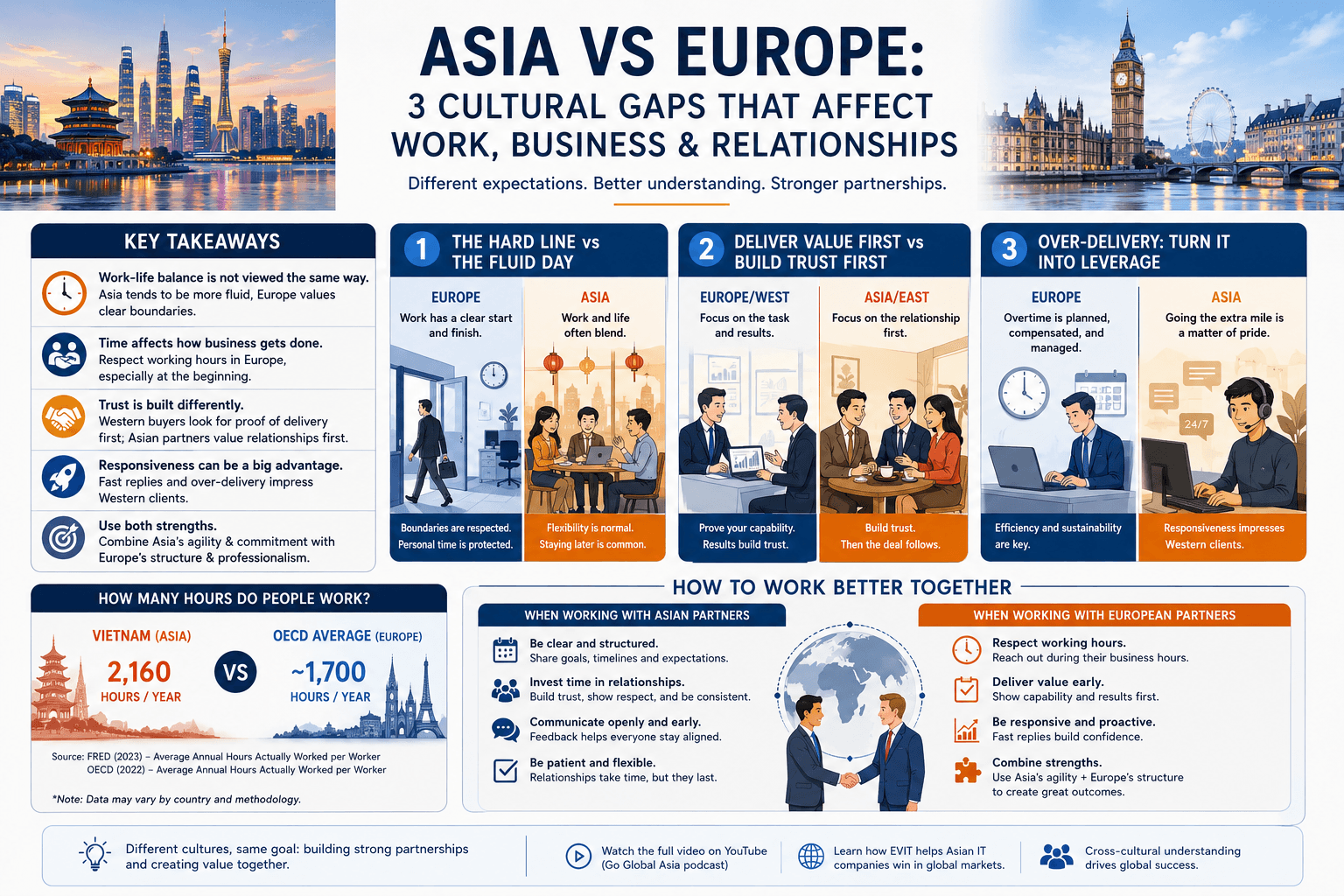
What works in Asia may not work in Europe, the U.S., or Australia. Often, many Vietnamese IT vendors struggle because they apply the same sales tactics globally without adapting to local business cultures.
Examples of common mistakes:
-
For instance, messaging CEOs on Zalo might work in Vietnam, but it’s unprofessional in Germany.
-
Similarly, sending mass cold emails is common in the U.S., but it could harm your reputation in France.
-
Moreover, failing to adapt negotiation styles to Western expectations often leads to lost deals.
Successful international expansion requires customized market entry strategies. Specifically, this means researching each region’s business etiquette, communication preferences, and decision-making processes.
Conclusion: How EVIT Can Help Asian IT Vendors Go Global
Breaking into the Western market is challenging. However, Asia’s IT market has the potential to thrive with the right approach. By avoiding these three critical mistakes, IT outsourcing companies can position themselves as reliable partners for global businesses. Overall, partnering with an experienced global expansion consulting team can help Asian IT vendors build the trust, systems, and long-term relationships needed to succeed internationally.
Want to go global? we are sharing more information on our YouTub channel -> you must check it out  Go Global Asia